
Off the beaten path
Hidden Gems
The places guidebooks don't tell you about. Hand-picked by locals, loved by those who discover them.
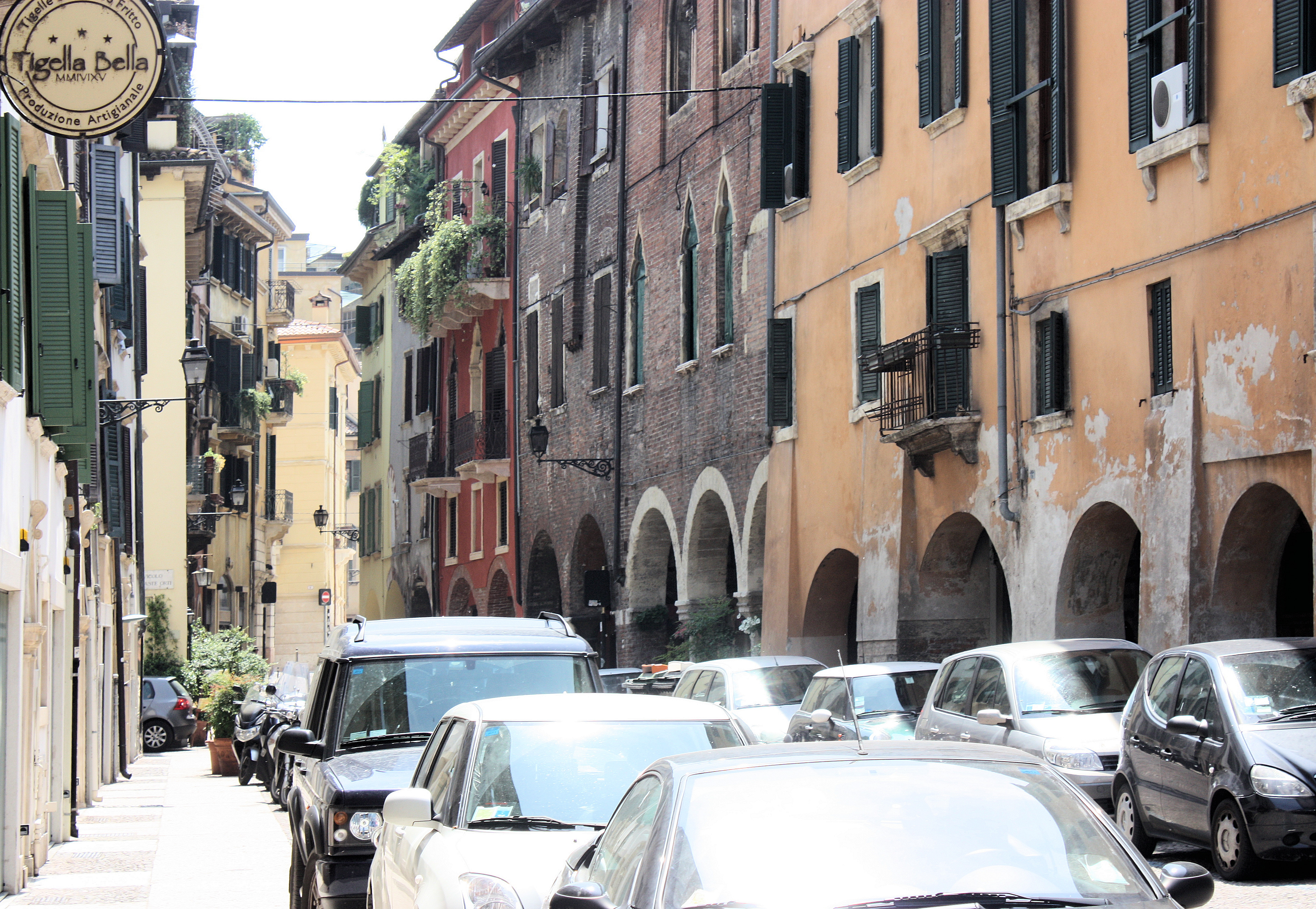
The medieval porticos where the city truly lives
Sottoriva
There's no table for tourists — not because they don't want them, it's just that the place is always full.

A garden from 1580 that Goethe visited obsessively. It has a maze. Almost nobody knows
Giardino Giusti
The rows of 16th-century cypresses can be seen from the other side of the Adige. But almost nobody knows what they're looking at.
The view tourists don't wake up early enough to see
Castel San Pietro at Dawn
Going up before 7 means having all of Verona to yourself — the Adige moving slowly in the silence, the city turning from grey to pink.

Dante wrote about it. Mantegna painted in it. You'll probably walk past without stopping
Basilica of San Zeno
The bronze Romanesque door has 48 panels telling the Bible in detail. It's 15 minutes on foot from the Arena. The Arena queues. San Zeno never does.

The most photographed piazza in Verona exists in two versions. The tourists'. And the real one
Piazza delle Erbe Before Eight
After 9 AM it's a labyrinth of selfie sticks. Before 8 it's a market of vegetables, wildflowers, and local cheeses. Just get up early.

The riverbank the Veronesi use every day. No guide mentions it
Le Regaste
The Verona that didn't expect tourists — but welcomes them anyway, if they come without expectations and with comfortable shoes.

Carved into rock. Frequented only by Veronesi. Breathtaking view
Sanctuary of Madonna di Lourdes
On the right bank of the Adige, carved directly into the limestone hill. No tourist goes there. No guide mentions it. Perfect.

The only Roman bridge in Verona. Best view from the side nobody stands on
Ponte Pietra at Sunset
Two thousand years old, rebuilt after WWII with its own original stones recovered from the riverbed. Still the best view in the city.

2,000-year-old theater on the hillside. Used for Shakespeare every summer
Roman Theater
The Arena gets all the press. But Verona has a second Roman theater, older, smaller, and completely ignored by most tourists.

Gothic tombs of Verona's medieval lords. Outside, free, astonishing
Arche Scaligere
The della Scala dynasty ruled Verona for a hundred years. They left their tombs in the middle of a narrow street where anyone can walk past.

A 14th-century fortress turned into Italy's most important museum renovation
Castelvecchio Museum
Everyone walks past the Castelvecchio on the Adige. Very few go inside, where Carlo Scarpa's renovation is as important as any painting on the walls.

Two churches, one on top of the other. The lower one is from the year 1000
San Fermo Maggiore
There are actually two churches here. The 11th-century Romanesque underground. The 14th-century Gothic above. Almost everybody only sees one.

Thirty metres from Piazza delle Erbe. Half the tourists. Twice the beauty
Piazza dei Signori
Thirty metres from Piazza delle Erbe, separated by a covered archway. Ringed by Renaissance palaces. A Dante statue. Far fewer selfie sticks.
The oldest public lapidary museum in the world. Founded 1738. Almost never visited
Museo Maffeiano
Founded in 1738 by the Veronese scholar Scipione Maffei, it's the oldest public lapidary museum in Europe. 2,500 years of stone inscriptions in a building next to the Arena.

Verona's largest church. The Pisanello fresco inside is the most important Gothic painting in Italy
Santa Anastasia
The biggest church in Verona has a Pisanello fresco that is the most important example of International Gothic in Italy. Most tourists at Ponte Pietra fifty metres away have never entered.
The neighbourhood across the Adige that no tourist map shows
Veronetta
Cross any of the bridges and turn away from the tourist signs. Veronetta is the university quarter, the cheap bars, the old churches without queues.
The darkest medieval alley in the centro storico. Three metres wide. 600 years old
Vicolo Crocioni
Four minutes from the Arena. Never in a guidebook. The narrowest alley in the centre, unchanged since the 15th century.
Renaissance military walls designed by Sanmicheli. Ten kilometres. Free. Almost nobody walks them
Bastioni di Verona
Ten kilometres of Renaissance walls designed by Michele Sanmicheli in the 16th century. Completely walkable. Free. One of the most impressive military architectures in northern Italy.
A 19th-century open-air sculpture museum that nobody visits because it's a cemetery
Monumental Cemetery
The Monumental Cemetery is arguably the finest collection of 19th-century Italian funerary sculpture in the Veneto. Nobody visits because it's a cemetery.
A hidden courtyard market where Veronesi buy their daily food. Tourists walk past the archway without entering
Corte Farina
A covered courtyard off a side street near Piazza delle Erbe. A daily food market for the Veronesi. Completely invisible from the main tourist routes.
Community
Know a hidden gem?
You know Verona better than any guidebook. Share your favourite spot and become part of the community.